
Financial planning for your retirement nest egg

Does financial planning sound intimidating? It doesn’t have to be. Building a well-rounded strategy can start with simple questions about your goals and can give you confidence in your future. By understanding the key elements of a sound financial plan—with the help of a financial professional—you may be able to mold a more complete vision of the retirement you want to live.
What is financial planning?
Financial planning is a process for setting, tracking and achieving your financial goals over time. It involves evaluating your current financial situation, determining where you want to be in the future and establishing a strategy for getting there. And when it comes to retirement, financial planning is an integral part of helping you live the life you want when your working days are done.
Financial planning first step: self-awareness
A powerful first step to any financial plan is knowing yourself. Setting money aside for the future can help you start building financial stability. But better understanding your goals for retirement—and potential roadblocks to getting there—will help clear your path toward retirement success.
- Cut the stress out of retirement. Stress can stem from many sources, but financial stability is a common concern for people approaching or living in retirement. Learn five steps to help achieve financial stability for a stress-free retirement.
- Pursue your next passion. Make the most of retirement by staying active. Discover activities for seniors that can help support your well-being and strengthen connections with friends and family.
- Prepare your financial plan. Do you know how much money you need to retire? Our retirement income and expense calculator can help identify potential income gaps and provide an estimate that works for your retirement needs.
What makes a well-rounded financial plan?
With clarity around what you want out of retirement, you can better strategize your path to getting there. Your financial professional can help you address these key areas to make your financial plan balanced and tailored to your retirement goals.
- Saving, investing and generating income. Once you retire, covering your day-to-day expenses with savings becomes key. An annuity may help bridge the gap between your retirement savings and other sources of retirement income by providing a steady stream of income.
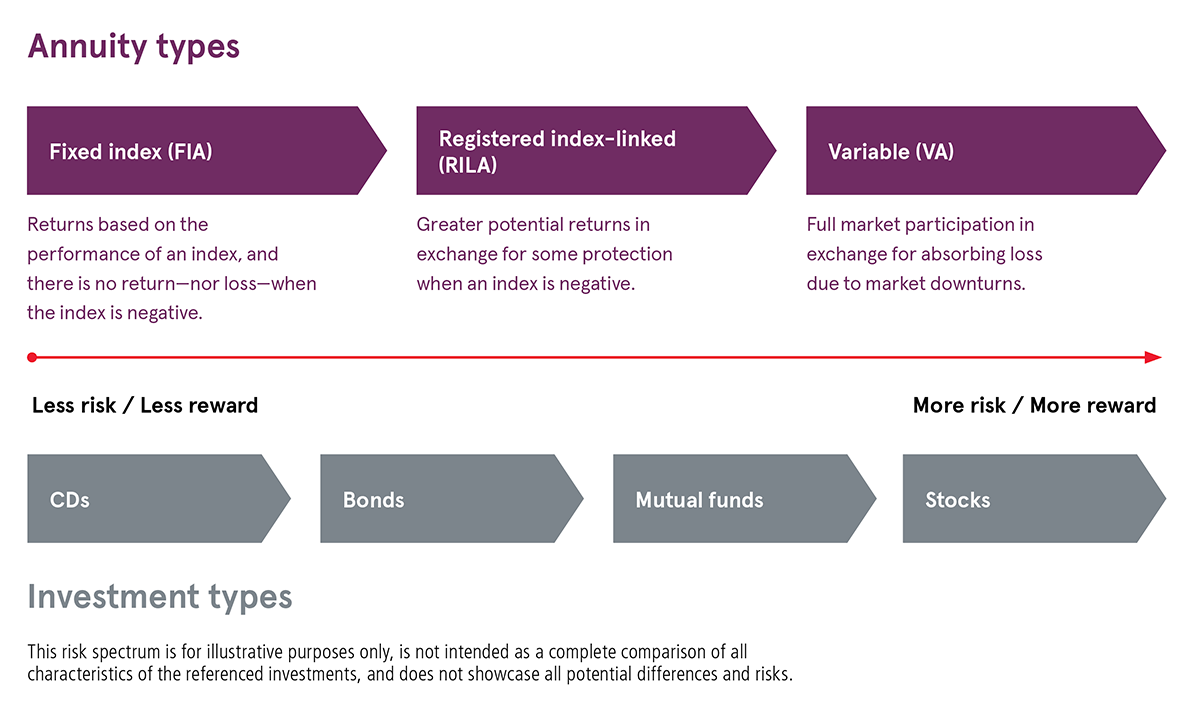
- Balancing protection and growth. Depending on your risk tolerance, asset growth is possible with many different types of annuities. Think of income protection and growth in the form of a risk spectrum—how much are you willing to expose yourself to potential market loss and how much do you want to gain?
- Planning tax-efficiently. Saving on your tax bill may be important to you—particularly when drawing income and investing. Whether your annuity earns a fixed rate of interest, offers growth tied to an index or includes investment subaccounts, these earnings have the potential to grow tax deferred* until withdrawn.
How annuities may fit into your financial plan.
An annuity is a retirement product that may provide a source of income when you need it. It can help complement traditional sources of retirement income, such as Social Security. Plus, if you don't need income right away, your assets may continue to grow tax deferred.
Annuities may potentially serve multiple purposes in your financial plan to help meet your unique retirement needs. As with any investment, annuities can be selected based on a balance between the risk and reward of the specific product.
To understand them better, let’s look at different types of annuities (along with various investment types) and how they’re commonly utilized in financial plans.
Planning calculators and tools to support your retirement goals
At Jackson, we have a variety of financial calculators and tools that can help clear up the financial planning process. With these tools, you can work with your financial professional to explore how much income you might need in retirement—and when. Then you can make a more informed decision about whether, and which, annuity products are a right fit for your plan.
- Retirement expense and income calculator. Work with a financial professional to effectively project expenses in retirement using factors such as current income, retirement age and retirement state. You can also calculate the gap between essential expenses and guaranteed† income.
- Social Security calculator. Social Security is a foundational part of a retirement income plan, and deciding when to start collecting monthly benefits is an important decision.
- Tax deferral calculator. Explore how savings may perform in a tax-deferred account compared with a taxable account to help inform a more tax-efficient retirement strategy.
Talk to your financial professional about your retirement goals and how an annuity may support your financial plan for retirement.